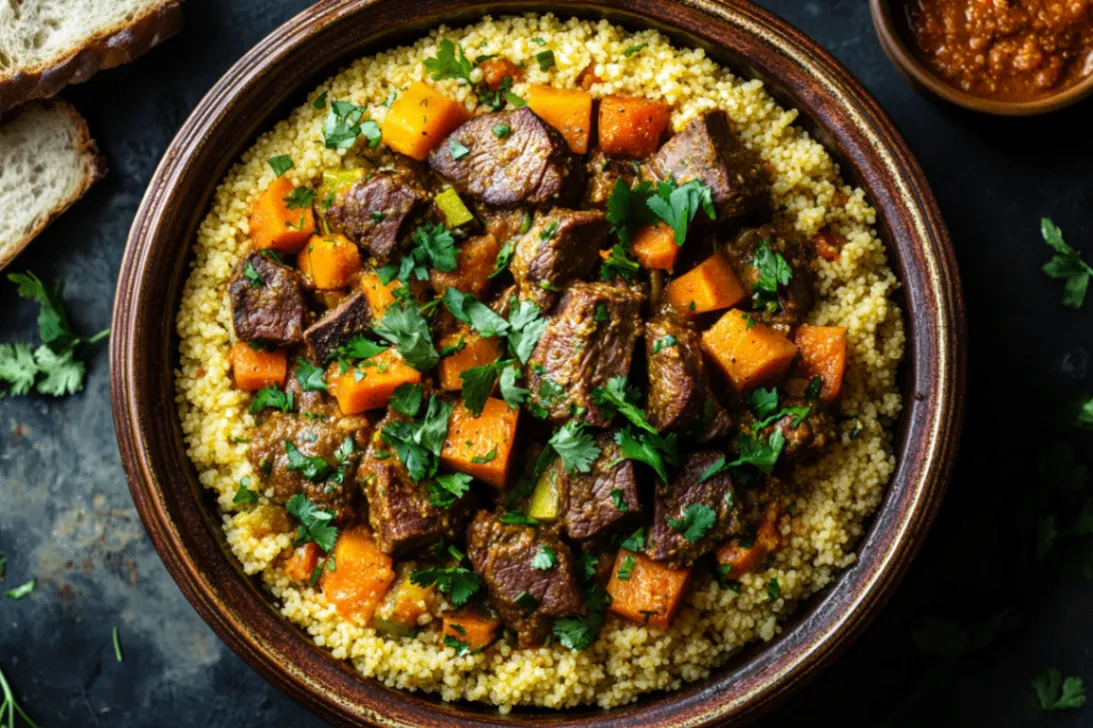
Table of Contents
Table of Contents
There’s something magical that happens when the aroma of Tunisian Couscous With Lamb fills your kitchen. I still remember the first time I experienced this incredible dish – it was during a visit to my friend Amina’s home in Tunis, where her grandmother taught me the sacred art of preparing this beloved North African treasure. The way she carefully steamed the couscous grains while the lamb simmered in aromatic spices was pure poetry in motion.
Tunisian Couscous With Lamb isn’t just a meal; it’s a celebration of centuries-old culinary traditions that have been passed down through generations. This hearty, soul-warming dish represents the very essence of Tunisian hospitality and the beautiful blend of Mediterranean and North African flavors that make Tunisian cuisine so special. Today, I’m thrilled to share this family favorite recipe with you, complete with all the secret tips and techniques I’ve learned along the way.
What makes this dish truly extraordinary is how it brings people together. In Tunisia, preparing couscous is often a communal activity, with family members gathering in the kitchen to share stories while the meal slowly comes to life. The tender lamb, perfectly steamed couscous, and vibrant vegetables create a harmony of flavors that will transport you straight to the bustling markets and warm homes of Tunisia.
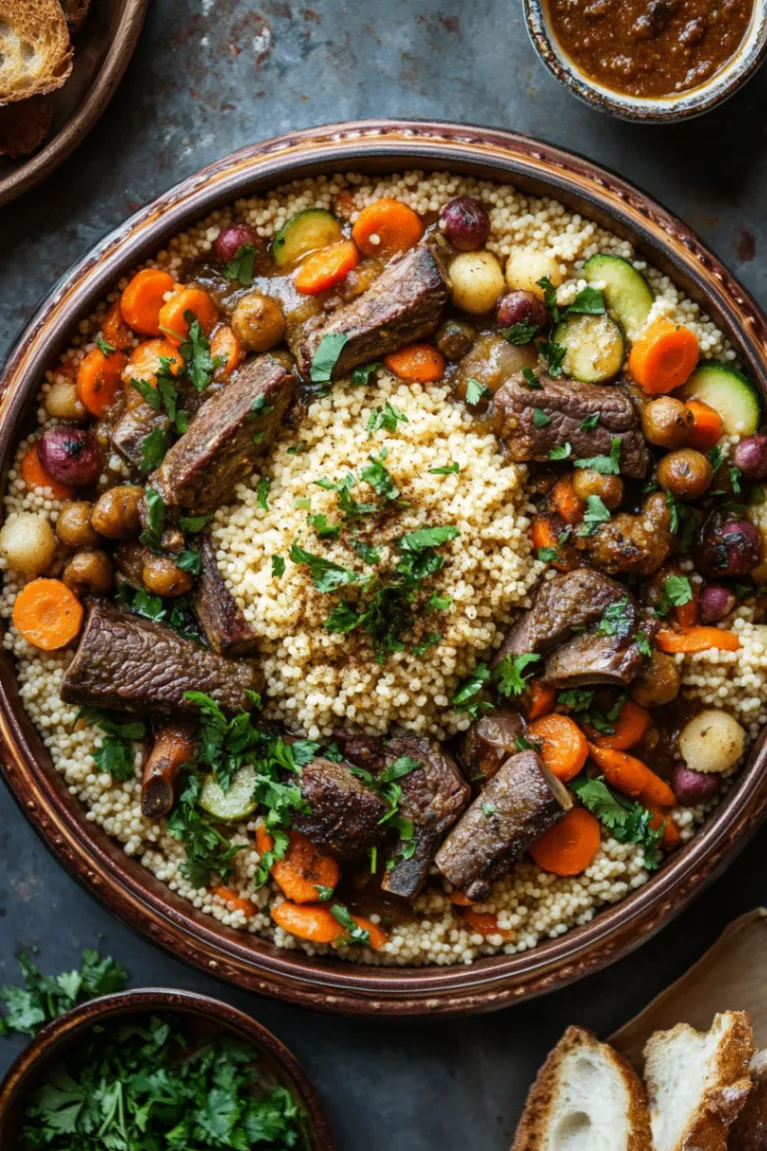
Tunisian Couscous With Lamb: A Step By Step Guide To Flavor And Tradition
Ingredients
Nutrition
Tried this recipe?
Let us know how it was!Ingredients: Building the Foundation of Authentic Flavor
Understanding Key Ingredients and Their Cultural Significance
The beauty of Tunisian Couscous With Lamb lies in its carefully selected ingredients, each playing a crucial role in creating the dish’s signature taste profile. The star of the show is, of course, the lamb – traditionally, Tunisian cooks prefer shoulder or leg cuts that become incredibly tender during the slow braising process. The lamb’s rich, gamey flavor pairs beautifully with the warm spices that define this delicious dish.
Couscous itself is more than just a grain; it’s the heart of North African cuisine. Made from semolina wheat, these tiny pearls absorb the flavors of the cooking liquid while maintaining their delicate texture. In traditional Tunisian households, couscous is steamed multiple times to achieve the perfect fluffy consistency that makes each bite a pleasure.
The spice blend is where the magic truly happens. Harissa, Tunisia’s beloved chili paste, provides the dish’s characteristic heat and depth. Combined with warm spices like cinnamon, cumin, and coriander, plus the brightness of fresh herbs like cilantro and parsley, these ingredients create a symphony of flavors that represents the very soul of Tunisian cooking.
Selecting Premium Quality Ingredients for Best Results
When shopping for Tunisian Couscous With Lamb, quality ingredients make all the difference in achieving that authentic taste. For the lamb, look for cuts with good marbling – the fat will render during cooking, keeping the meat moist and flavorful. I always recommend visiting a trusted butcher who can provide grass-fed lamb, as it has a cleaner, more pronounced flavor that elevates this easy homemade recipe.
For couscous, medium-grain semolina couscous works best for this traditional preparation. Avoid the instant variety if possible, as the traditional steaming method produces superior results. The grains should be uniform in size and have a golden color that indicates proper processing.
Fresh vegetables are equally important – choose firm carrots, crisp turnips, and vibrant zucchini. The tomatoes should be ripe but not oversoft, as they’ll break down during the cooking process to create a rich, flavorful base. When selecting spices, whole spices that you grind yourself will provide much more intense flavors than pre-ground alternatives.
Smart Substitutions and Dietary Alternatives
While traditional Tunisian Couscous With Lamb is perfection in itself, there are thoughtful substitutions you can make without compromising the dish’s integrity. If lamb isn’t available, beef chuck roast or even chicken thighs can work wonderfully, though the cooking times will need adjustment. For those following specific dietary requirements, this family favorite recipe adapts beautifully.
For a lighter version, you can reduce the amount of oil and rely more on the natural fats from the meat. Vegetarians can create a stunning version using hearty vegetables like eggplant and chickpeas, while maintaining all the traditional spices and cooking techniques.
If you can’t find harissa, you can make a substitute using red chilies, garlic, caraway seeds, and a touch of tomato paste. Pearl couscous can replace traditional couscous for a different texture experience, though the cooking method will need to be adapted. The key is maintaining the balance of flavors that makes this dish so special.
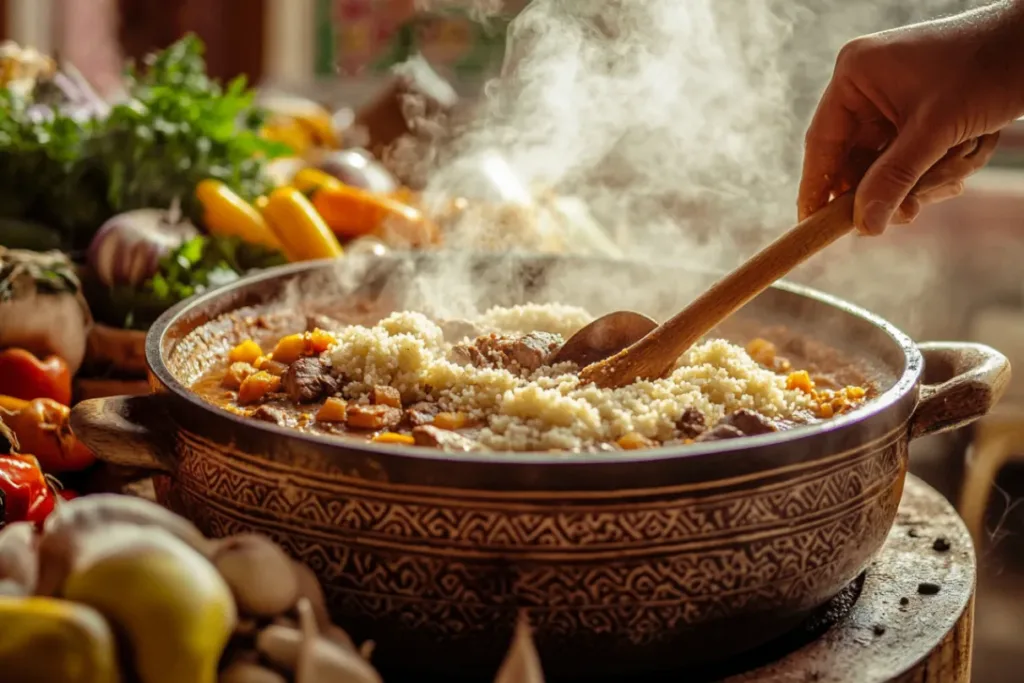
Preparation Steps: Mastering the Art of Tunisian Cooking
Essential Prep Work and Professional Cleaning Techniques
Proper preparation is the foundation of exceptional Tunisian Couscous With Lamb. Start by cutting your lamb into generous 2-inch pieces, removing excess fat but leaving enough for flavor. Pat the meat completely dry with paper towels – this crucial step ensures proper browning and prevents the meat from steaming in its own juices.
The couscous requires special attention and shouldn’t be rushed. Traditional preparation involves washing the grains in cool water, then letting them rest to absorb moisture evenly. This process, called “resting,” allows the couscous to hydrate gradually, resulting in perfectly separated grains rather than a clumpy mass.
Vegetable preparation is equally important for this how to make Tunisian couscous masterpiece. Cut vegetables into uniform pieces that will cook evenly – carrots and turnips should be about 1-inch pieces, while zucchini can be slightly larger since it cooks faster. Dice your onions finely for the base, but keep some larger pieces for texture variety in the final dish.
Step-by-Step Cooking Instructions with Secret Professional Tips
Begin your Tunisian Couscous With Lamb journey by heating oil in a heavy-bottomed pot or traditional couscoussier. Brown the lamb pieces in batches, ensuring each piece develops a beautiful golden crust – this caramelization adds incredible depth to the final dish. Don’t overcrowd the pan; patience here pays dividends in flavor.
Once the lamb is browned, remove it and sauté your onions in the same pot, scraping up all those delicious browned bits. Add your spice blend and cook until fragrant – about 30 seconds – then return the lamb to the pot with tomatoes and enough water to barely cover. This creates the rich braising liquid that will tenderize the meat and infuse it with all those beautiful Tunisian flavors.
Here’s my secret tip: add your hardest vegetables first, allowing them time to cook through before adding the more delicate ones. Root vegetables like carrots and turnips go in early, while zucchini and tomatoes join the party later. The couscous steams above this aromatic mixture, absorbing all the wonderful flavors rising from below.
Avoiding Common Mistakes for Perfect Results
The most common mistake when making Tunisian Couscous With Lamb is rushing the process. This delicious dish requires patience and respect for traditional timing. Never try to speed up the lamb braising – low and slow cooking is what transforms tough meat into melt-in-your-mouth perfection.
Another frequent error involves the couscous preparation. Many home cooks add too much liquid at once or skip the resting periods between steamings. Traditional couscous should be steamed three times, with brief resting periods that allow the grains to absorb moisture evenly and achieve that signature fluffy texture.
Temperature control is crucial throughout the cooking process. The braising liquid should maintain a gentle simmer, not a rolling boil, which can make the meat tough. Similarly, the steam for the couscous should be steady but not violent – you want gentle, consistent heat that cooks the grains without making them mushy or overcooked.
Serving & Final Touches: Presenting Your Culinary Masterpiece
Creative Presentation Ideas for Special Occasions
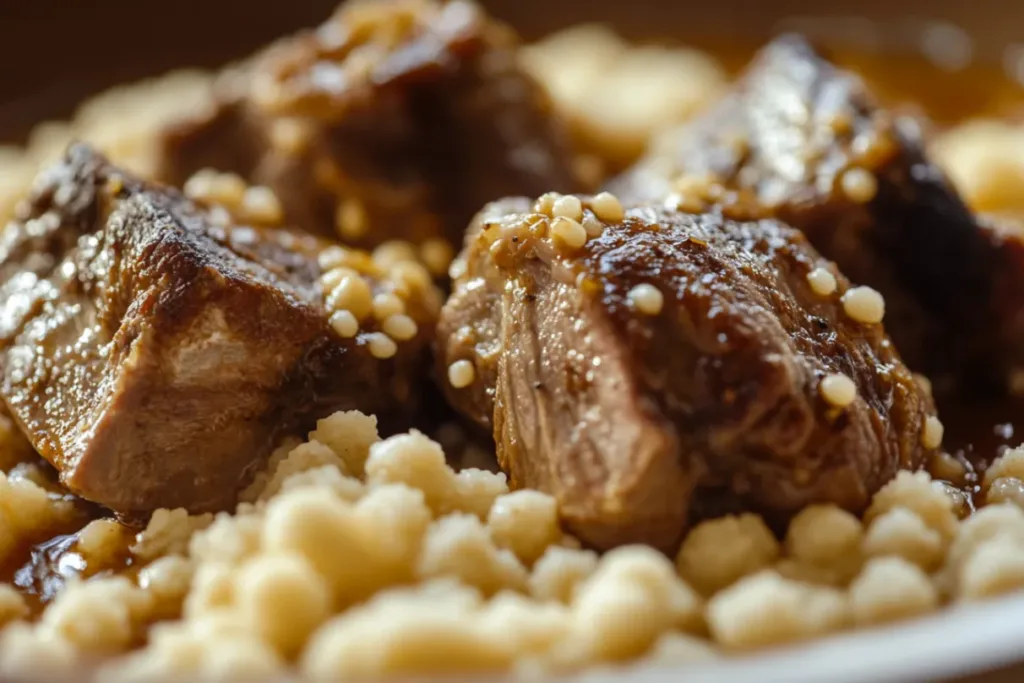
Presenting Tunisian Couscous With Lamb is an art form that honors the dish’s cultural significance. Traditionally, the couscous is mounded in the center of a large, shallow serving dish, creating a golden pyramid that showcases the perfectly steamed grains. Arrange the tender lamb pieces and colorful vegetables around this central mound, allowing the rich braising liquid to pool attractively around the base.
For special occasions, consider garnishing with fresh herbs like mint and cilantro, which add both visual appeal and fresh flavor notes that complement the warm spices. Toasted almonds or pine nuts sprinkled over the top provide textural contrast and a touch of elegance that transforms this family favorite recipe into restaurant-quality presentation.
The traditional Tunisian approach involves serving the dish family-style, encouraging communal dining and conversation. Provide small bowls of extra harissa for those who enjoy additional heat, and always have plenty of warm bread available for sopping up the delicious braising liquid – it’s far too good to waste!
Perfect Pairings and Complementary Side Dishes
Tunisian Couscous With Lamb is substantial enough to stand alone, but certain accompaniments elevate the entire dining experience. A simple salad of tomatoes, cucumbers, and red onions dressed with olive oil and lemon juice provides a refreshing contrast to the rich, warming flavors of the main dish.
Tunisian bread, particularly the traditional “tabouna” or a good crusty French bread, is essential for authentic presentation. The bread serves multiple purposes – it’s perfect for scooping up the tender meat and vegetables, and it helps absorb the flavorful braising liquid that pools at the bottom of your bowl.
Consider serving a selection of Tunisian pickled vegetables (called “turshi”) alongside your couscous. These tangy, crunchy vegetables provide palate-cleansing acidity that balances the richness of the lamb and helps reset your taste buds between bites of this complex, layered dish.
Storage Solutions and Reheating Techniques
Leftover Tunisian Couscous With Lamb keeps beautifully for up to three days in the refrigerator, though the flavors often improve overnight as they have time to meld and develop. Store the couscous and meat mixture in separate containers to maintain the best texture for both components.
When reheating, add a splash of warm broth or water to the meat mixture to restore moisture lost during storage. Heat gently in a covered pot, stirring occasionally to ensure even warming. The couscous can be refreshed by steaming it briefly or by mixing it with a small amount of warm broth and heating it in the microwave with a damp paper towel covering.
For longer storage, this easy homemade recipe freezes wonderfully for up to three months. Freeze the meat and vegetable mixture separately from the couscous, as the grains can become mushy when frozen. Thaw overnight in the refrigerator before reheating using the gentle methods described above.
 DINNER
 LUNCH
LUNCH Desserts
 BREAKFAST
For more amazing recipes, be sure to check out our other sections to explore a variety of ideas that will enrich your cooking experience. Each section offers its own unique flavors to ensure a delightful culinary journey:
Easy and Quick Recipes: A collection of dishes that guarantee delicious meals with minimal effort and time.
Healthy Recipes: Discover healthy and delicious options that fit your lifestyle.
Desserts: A diverse selection of sweets that will add a special touch of sweetness to your table.
Lunch Recipes: Tasty lunch ideas that you can easily prepare to delight your family.
Dinner Recipes: Delicious and easy-to-make recipes that will make your dinner a memorable occasion.
Frequently Asked Questions
Q: How long does it take to make authentic Tunisian Couscous With Lamb from start to finish? A: Traditional Tunisian Couscous With Lamb requires about 2.5 to 3 hours of total cooking time, including preparation. While this might seem lengthy, most of this time is passive cooking where the lamb braises and the couscous steams. The active preparation time is only about 30 minutes, making it perfect for weekend cooking or special occasions.
Q: Can I use a regular steamer instead of a traditional couscoussier for this recipe? A: Absolutely! While a couscoussier produces the most authentic results, you can achieve excellent Tunisian Couscous With Lamb using a regular steamer basket set over a large pot. The key is ensuring the couscous doesn’t touch the braising liquid below while still benefiting from the aromatic steam rising from the meat and vegetables.
Q: What’s the best way to adjust the spice level in this family favorite recipe? A: The beauty of Tunisian Couscous With Lamb lies in its adaptable heat level. Start with less harissa than called for and taste as you go. Remember that the flavors intensify during cooking, so what seems mild initially may become perfectly spiced by the end. You can always serve extra harissa on the side for those who prefer more heat.
Q: Is it possible to make this delicious dish ahead of time for entertaining? A: This is actually one of the best make-ahead dishes! Tunisian Couscous With Lamb often tastes even better the next day as the flavors have time to develop and meld. Prepare the entire dish up to two days in advance, then reheat gently before serving. This makes it perfect for stress-free entertaining.
Q: What wine pairs best with Tunisian Couscous With Lamb? A: The rich, spiced flavors of Tunisian Couscous With Lamb pair beautifully with medium to full-bodied red wines. Consider a Côtes du Rhône, Syrah, or even a robust Rosé. If you prefer white wine, choose something with good acidity like a Viognier or Roussanne to cut through the richness of the lamb while complementing the aromatic spices.
A Journey Worth Taking
There’s something deeply satisfying about mastering Tunisian Couscous With Lamb – it’s more than just learning a recipe; it’s connecting with centuries of culinary tradition and family heritage. Every time I prepare this dish, I’m transported back to that warm kitchen in Tunis, watching skilled hands transform simple ingredients into something truly magical.
This delicious dish represents everything I love about cooking: the way simple ingredients can become extraordinary through patience and technique, how food brings people together around a shared table, and how traditional recipes carry forward the stories and flavors of generations past. When you serve Tunisian Couscous With Lamb to your loved ones, you’re not just offering a meal – you’re sharing a piece of North African culture and hospitality.
I encourage you to embrace the process, take your time, and allow yourself to enjoy every step of creating this family favorite recipe. Don’t be afraid to make it your own by adjusting spices to your taste or adding your favorite vegetables. The beauty of traditional cooking lies not in rigid adherence to rules, but in understanding the techniques and principles that make a dish successful.
Please try this recipe and share your experience! I’d love to hear how your Tunisian Couscous With Lamb turned out, what modifications you made, and how your family responded to this taste of Tunisia. Cooking is meant to be shared, and every cook who attempts this recipe adds their own story to its continuing legacy.