Table of Contents
Table of Contents
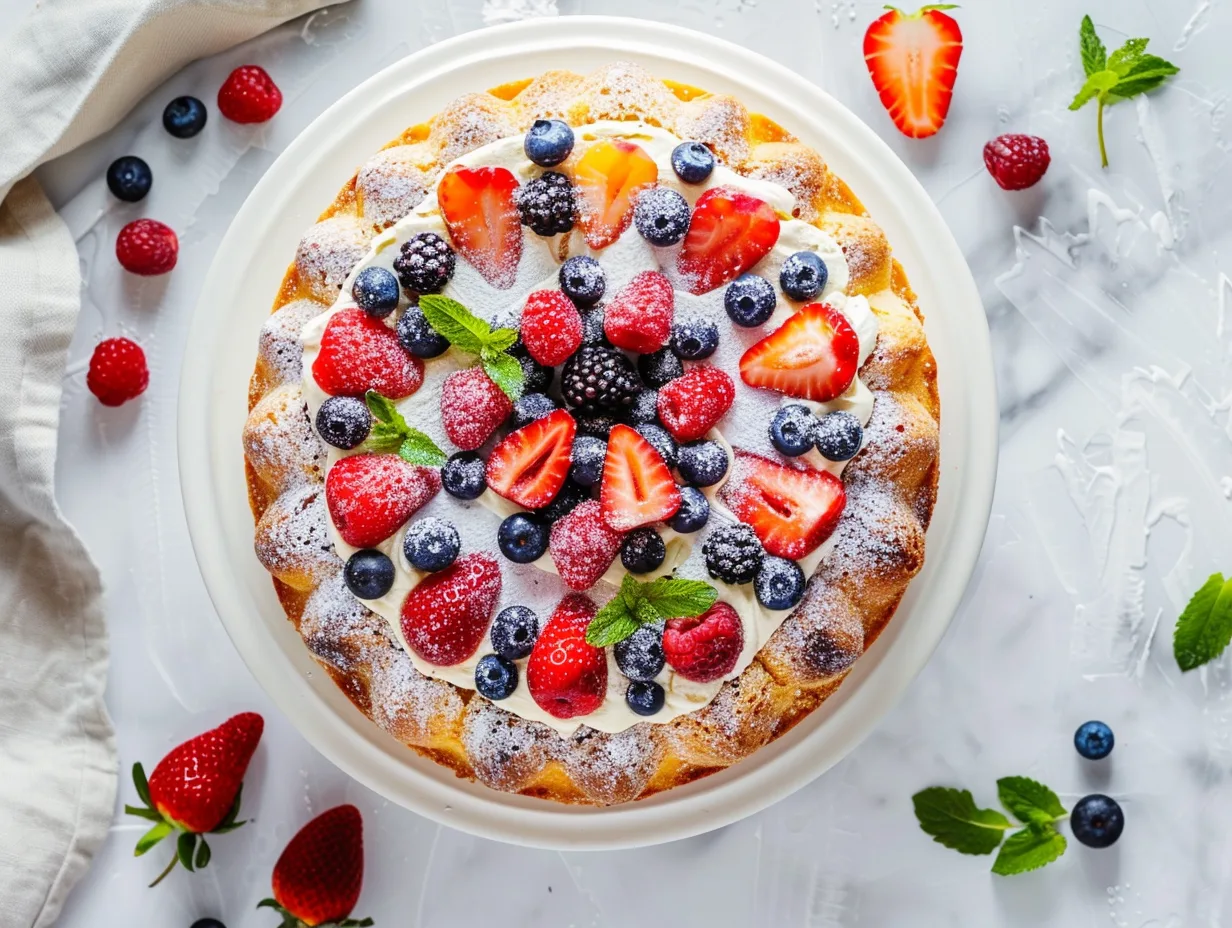
There’s something magical about the moment you slice into a perfectly baked Fresh Fruit Sponge Cake – the gentle give of the fluffy layers, the burst of vibrant colors from seasonal fruits, and that irresistible aroma that fills your kitchen like a warm hug. This delightful dessert has been gracing tables across the world for generations, and for good reason. It’s the kind of recipe that transforms ordinary moments into celebrations.
I still remember the first time my grandmother taught me to make her signature Fresh Fruit Sponge Cake. I was eight years old, standing on a wooden stool in her sunny kitchen, watching in wonder as she folded fresh strawberries and blueberries into the lightest, most ethereal cake batter I’d ever seen. “The secret,” she whispered conspiratorially, “is treating the batter like a cloud – gentle hands make the fluffiest cakes.” That lesson has stayed with me for decades, and now I’m thrilled to share this treasured family favorite recipe with you.
The Fresh Fruit Sponge Cake isn’t just another dessert; it’s a canvas for creativity, a celebration of seasonal bounty, and surprisingly, one of the most approachable easy homemade recipes you’ll ever master. Whether you’re hosting a summer garden party, celebrating a special occasion, or simply craving something sweet and wholesome, this delicious dish delivers every single time.
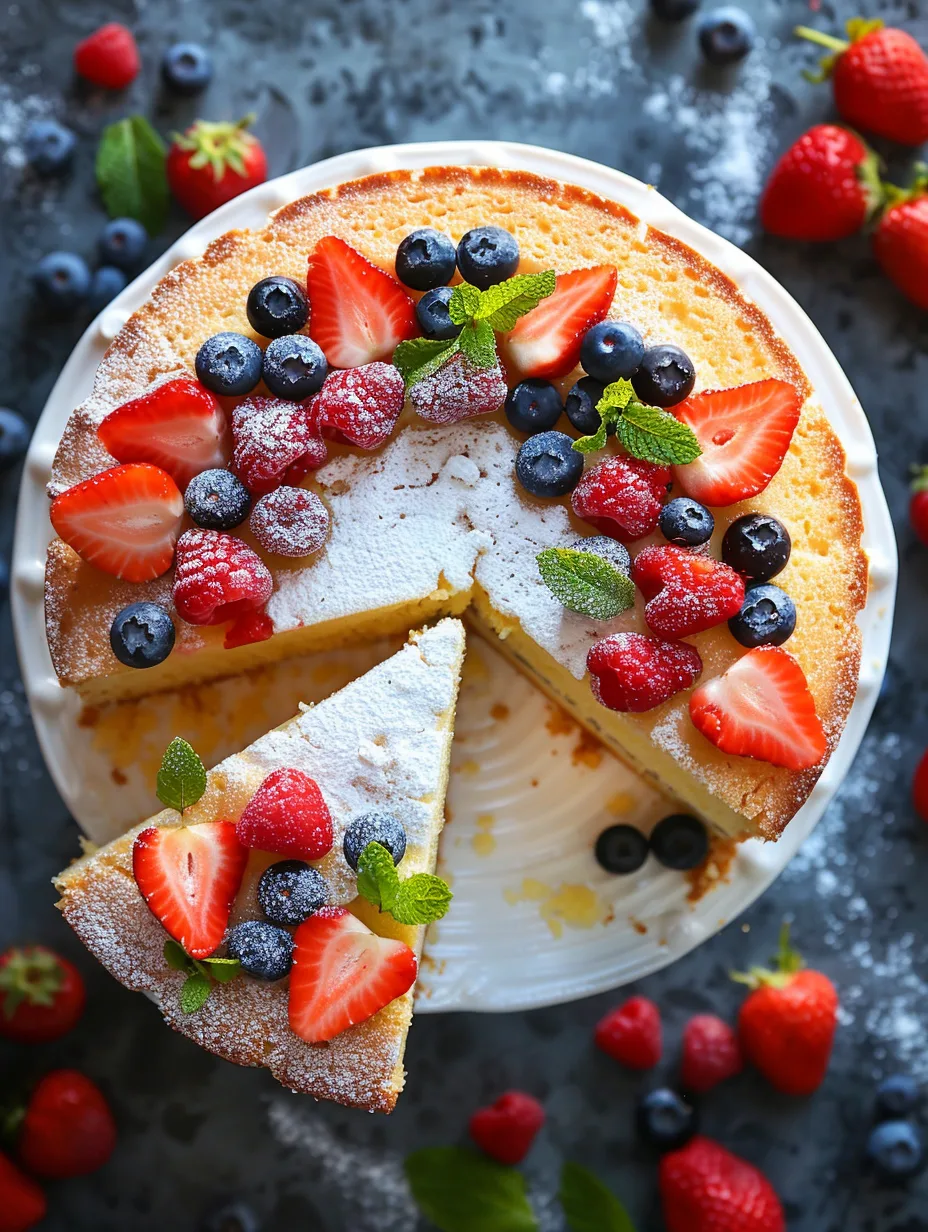
Fresh Fruit Sponge Cake Recipe | Light, Fluffy & Easy Dessert
Ingredients
Tried this recipe?
Let us know how it was!Ingredients: Building Blocks of the Perfect Fresh Fruit Sponge Cake
Understanding Key Ingredients and Their Essential Roles
Creating an exceptional Fresh Fruit Sponge Cake begins with understanding how each ingredient contributes to the final masterpiece. The beauty of this recipe lies in its simplicity – just a handful of pantry staples and fresh, seasonal fruits come together to create something truly extraordinary.
The foundation starts with eggs, which serve as both the structure and leavening agent in our sponge. Unlike traditional cakes that rely heavily on butter and chemical leaveners, a proper Fresh Fruit Sponge Cake gets its characteristic light, airy texture from properly beaten eggs. The proteins in egg whites trap air when whipped, creating tiny bubbles that expand during baking, resulting in that coveted spongy texture.
Caster sugar (or superfine sugar) dissolves more easily than regular granulated sugar, creating a smoother batter that won’t weigh down our delicate sponge. The sugar not only sweetens our cake but also helps stabilize the egg foam and contributes to the golden color we love to see.
Plain flour provides structure without being too heavy. The key is using just enough to give the cake body while maintaining that cloud-like texture. Self-raising flour can be substituted, but I prefer controlling the rise with fresh eggs rather than relying on chemical leaveners that might make the cake too dense for our Fresh Fruit Sponge Cake.
The star of our show – fresh fruits – brings natural sweetness, vibrant colors, and delightful bursts of flavor throughout each slice. Berries work exceptionally well because their size complements the cake’s texture, while stone fruits like peaches or plums add a luxurious touch when sliced thin.
Expert Tips for Selecting Premium Quality Ingredients
The difference between a good Fresh Fruit Sponge Cake and an absolutely spectacular one often comes down to ingredient quality. Here’s what I’ve learned through years of baking this family favorite recipe:
For eggs, always use the freshest ones possible – they should be at room temperature for optimal volume when beaten. You can quick-temper cold eggs by placing them in warm water for 10 minutes. Fresh eggs have firmer whites and brighter yolks, which translate to better structure and richer flavor in your finished cake.
When selecting fruits for your Fresh Fruit Sponge Cake, choose pieces that are ripe but still firm. Overripe fruits release too much moisture during baking, potentially making your sponge soggy. Berries should be plump and vibrant in color, while stone fruits should yield slightly to gentle pressure but still hold their shape when sliced.
Your flour should be fresh and stored in a cool, dry place. Sift it before measuring to ensure accuracy and to incorporate air, which helps maintain the light texture we’re after. If your flour has been sitting in the pantry for months, it might have lost some of its protein strength, affecting the final texture.
Quality vanilla extract makes a noticeable difference in flavor – avoid imitation vanilla when possible. Pure vanilla extract has complex flavor notes that complement the fresh fruits beautifully without overpowering their natural sweetness.
Smart Substitutions and Creative Alternatives
One of the most wonderful aspects of this Fresh Fruit Sponge Cake recipe is its flexibility. Life happens – maybe you’re out of a key ingredient, following dietary restrictions, or simply want to experiment with new flavors. Here are my tried-and-tested substitutions that maintain the cake’s integrity while opening up exciting possibilities.
For those avoiding gluten, you can substitute the plain flour with a high-quality gluten-free flour blend (look for one containing xanthan gum). The texture will be slightly different but still deliciously light. Almond flour can work too, though it will create a denser, more moist cake with a lovely nutty flavor that pairs beautifully with berries.
If you’re working with dietary restrictions around eggs, aquafaba (the liquid from canned chickpeas) can be whipped to create foam similar to egg whites. Use 3 tablespoons of aquafaba per egg white, though you’ll need to whip it longer to achieve proper peaks. The result won’t be identical to a traditional Fresh Fruit Sponge Cake, but it’s surprisingly close and completely plant-based.
Sugar alternatives like coconut sugar or maple syrup can work, though they’ll change both the flavor profile and the cake’s color. Reduce the liquid slightly if using liquid sweeteners, and expect a more caramelized flavor that works especially well with autumn fruits like pears or apples.
Seasonal fruit variations are endless – summer calls for berries and stone fruits, autumn brings apples and pears, winter offers citrus segments, and spring welcomes the first strawberries and early summer fruits. Frozen fruits can work in a pinch; just toss them in a little flour before folding them in to prevent them from sinking and bleeding too much color.
Preparation Steps: Mastering the Art of Fresh Fruit Sponge Cake
Initial Preparation and Essential Setup Tips
Success with any Fresh Fruit Sponge Cake begins long before you start mixing ingredients. Proper preparation sets the stage for a stress-free baking experience and consistently excellent results. This is where many home bakers stumble, but with the right approach, you’ll feel confident and organized throughout the entire process.
Start by preheating your oven to 180°C (350°F) and positioning the rack in the center. A properly preheated oven is crucial for achieving the right rise and texture in your sponge. While the oven heats, prepare your cake tins – I recommend two 20cm (8-inch) round tins for the classic layered presentation. Grease them lightly with butter and dust with flour, tapping out any excess. This ensures your Fresh Fruit Sponge Cake releases cleanly without sticking.
Room temperature ingredients mix more easily and create better texture, so remove your eggs from the refrigerator about 30 minutes before starting. If you’re short on time, place them in a bowl of warm water for 10 minutes. Measure all your dry ingredients and have them ready in separate bowls – this professional technique called “mise en place” prevents mistakes and keeps you organized during the crucial mixing stages.
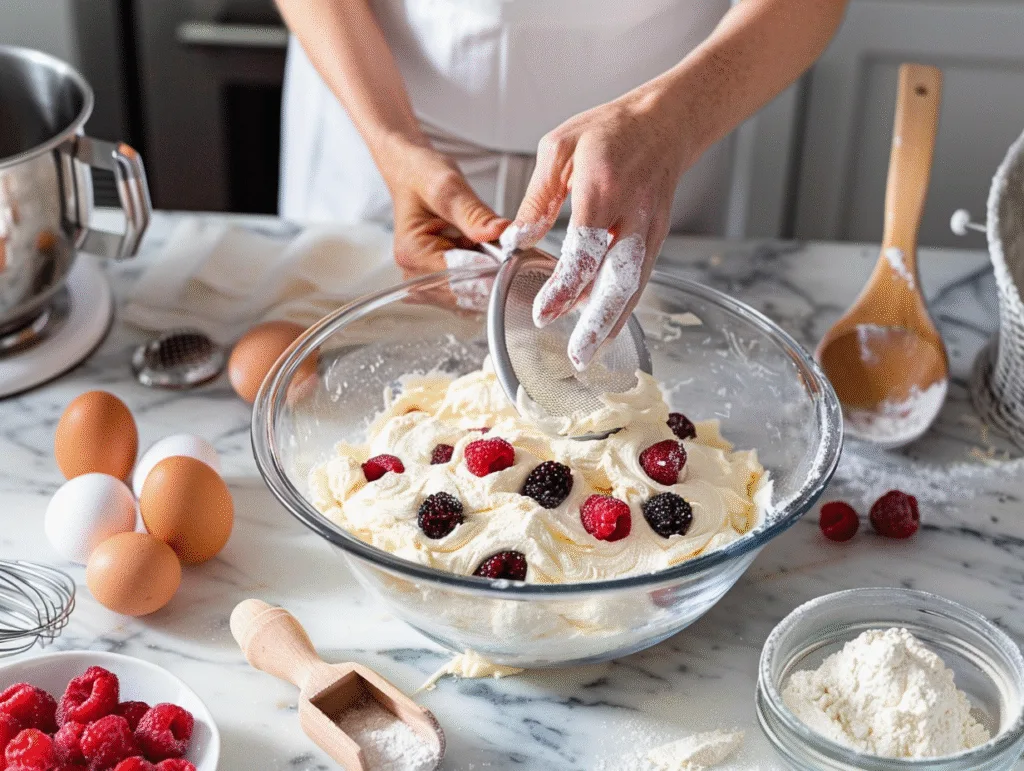
Prepare your fruits by washing and drying them thoroughly. Excess moisture is the enemy of a light sponge, so pat berries dry with paper towels and slice larger fruits into appropriate sizes. Toss the fruit pieces lightly in a tablespoon of flour – this helps prevent them from sinking to the bottom during baking and creates beautiful distribution throughout your Fresh Fruit Sponge Cake.
Have all your equipment ready: electric mixer (hand or stand mixer works), large mixing bowls, rubber spatula for folding, fine-mesh sieve for flour, and measuring tools. Clean, dry bowls are essential, especially for whipping egg whites – any trace of fat or moisture will prevent proper whipping.
Step-by-Step Instructions with Professional Secrets
Now comes the exciting part – transforming simple ingredients into a magnificent Fresh Fruit Sponge Cake. The technique here is what separates amateur attempts from bakery-quality results, and I’m sharing all the professional secrets I’ve learned over the years.
Begin by separating your eggs while they’re still cold (they separate more easily), then let them come to room temperature. In a large, spotlessly clean bowl, whisk the egg whites until they form soft peaks. This usually takes 3-4 minutes with an electric mixer. Gradually add half the sugar while continuing to whisk until you achieve glossy, firm peaks that hold their shape when you lift the beaters. This meringue is the foundation of your cake’s light texture.
In a separate bowl, whisk the egg yolks with the remaining sugar until pale and creamy – about 2-3 minutes. The mixture should fall in ribbons when you lift the whisk. This step incorporates air and helps create the cake’s tender crumb.
Here’s where many bakers make critical mistakes, but I’ll guide you through the proper folding technique. Add one-third of the meringue to the egg yolk mixture and fold gently using a large metal spoon or rubber spatula. Use a cutting and folding motion, turning the bowl as you work. This initial fold lightens the yolk mixture, making it easier to incorporate the remaining meringue without deflating it.
Sift the flour directly over the mixture and add another third of the meringue. Fold very gently until almost combined, then add the remaining meringue and continue folding until just combined. The key word here is “just” – overmixing will deflate the air you’ve worked so hard to incorporate. Finally, fold in your prepared fruits with the lightest possible touch.
Divide the batter evenly between your prepared tins and bake for 20-25 minutes, until the cakes are golden and spring back lightly when touched. Resist the urge to open the oven door during the first 18 minutes – the sudden temperature change can cause your Fresh Fruit Sponge Cake to collapse.
Common Pitfalls and How to Avoid Them
Even experienced bakers can encounter challenges when making Fresh Fruit Sponge Cake, but understanding common mistakes helps you avoid them and troubleshoot when things go awry. Let me share the most frequent issues I’ve seen and their solutions.
The most common problem is a dense, heavy cake instead of the light, airy texture we’re after. This usually happens from overmixing after adding the flour, which develops the gluten and deflates the air bubbles we’ve carefully created. Remember: fold don’t stir, and stop mixing as soon as the ingredients are just combined. Another cause is underbeaten egg whites – they should hold firm peaks that don’t flop over when you turn the bowl upside down.
Fruits sinking to the bottom is another frequent frustration. This occurs when the fruit pieces are too wet or too large, or when the batter isn’t thick enough to support them. Always pat fruits dry, toss them lightly in flour, and cut larger pieces into appropriate sizes. If your fruits are particularly juicy (like very ripe strawberries), you might need to reduce other liquids slightly or add an extra tablespoon of flour to the batter.
Uneven baking or sunken centers typically result from oven temperature issues or opening the oven door too early. Invest in an oven thermometer to ensure accurate temperatures, and resist peeking until at least 18 minutes have passed. If your Fresh Fruit Sponge Cake rises beautifully then collapses, your oven might be too hot initially, causing rapid rise followed by collapse as the structure can’t support itself.
Dry or tough texture often comes from overbaking or using old eggs. Fresh eggs create more volume and tenderness. Test for doneness with a light touch – the cake should spring back gently and just barely start to pull away from the sides of the tin. A toothpick test can work, but be careful not to overbake while waiting for it to come out completely clean.
Serving & Final Touches: Elevating Your Fresh Fruit Sponge Cake
Creative Presentation Ideas That Wow
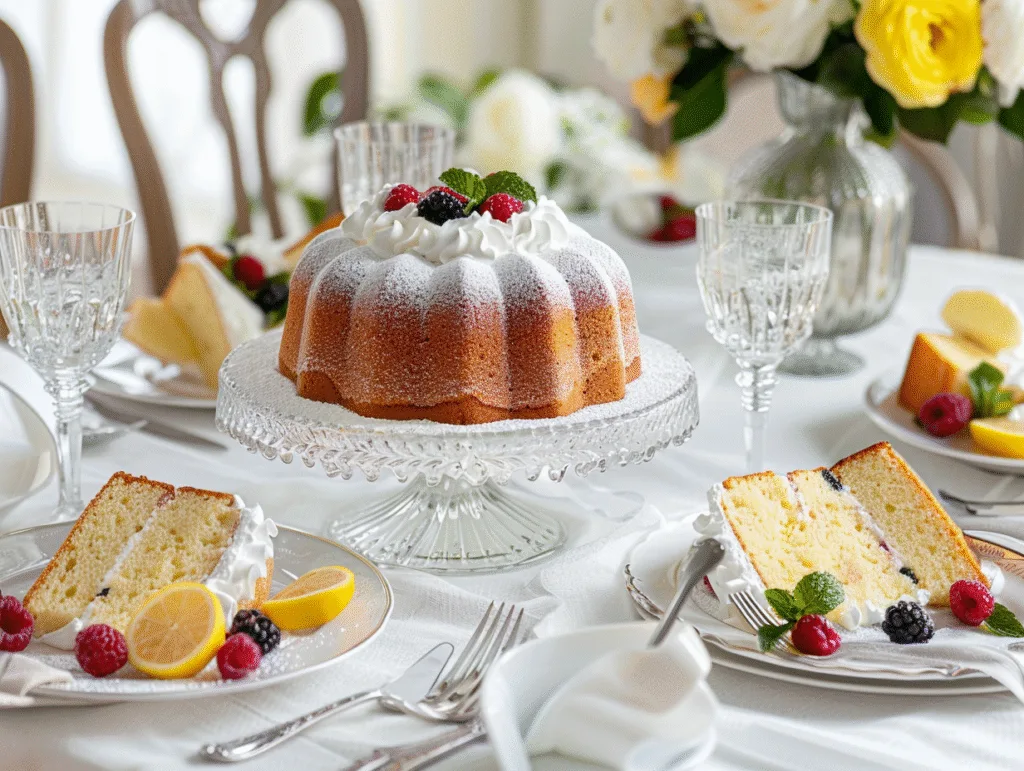
The moment your Fresh Fruit Sponge Cake emerges from the oven, perfectly golden and fragrant, you’re only halfway to creating a truly memorable dessert experience. Presentation transforms a simple homemade cake into a stunning centerpiece that rivals any professional bakery creation. The beauty lies in the cake’s natural simplicity, which provides the perfect canvas for creative expression.
For an elegant, rustic presentation, allow your Fresh Fruit Sponge Cake to cool completely, then dust the top lightly with powdered sugar using a fine-mesh sieve. This creates a beautiful snow-like effect that highlights the colorful fruits peeking through the golden sponge. Place the cake on a vintage cake stand or a simple white plate, and surround the base with a few scattered fresh berries and mint leaves for a garden-fresh appearance.
If you’re feeling more adventurous, consider the layered approach that never fails to impress. Split each sponge layer horizontally using a sharp serrated knife, creating four thin layers total. Brush each layer lightly with fruit syrup (made by gently heating fresh fruit with a tablespoon of sugar until syrupy), then alternate cake layers with freshly whipped cream and additional fruits. This technique creates a show-stopping dessert that showcases the Fresh Fruit Sponge Cake’s versatility.
For special occasions, transform your cake into an edible work of art by arranging fresh fruits in concentric circles or geometric patterns on top of a simple cream cheese frosting. Start from the outside edge and work inward, alternating colors and textures. Blueberries, sliced strawberries, and kiwi rounds create stunning visual contrast, while a final flourish of edible flowers or fresh herbs adds sophisticated elegance.
Individual portions can be just as impressive as whole cakes. Cut your Fresh Fruit Sponge Cake into squares or use round cookie cutters to create perfect circles. Serve each portion on individual plates with a dollop of mascarpone or Greek yogurt, a drizzle of honey, and a garnish of toasted nuts or coconut flakes. This approach is perfect for dinner parties where you want to ensure each guest receives a picture-perfect serving.
Perfect Pairings and Complementary Accompaniments
The versatility of Fresh Fruit Sponge Cake extends far beyond the cake itself – the right accompaniments can elevate this delicious dish from delightful to absolutely extraordinary. Understanding flavor profiles and textures helps you create combinations that complement rather than compete with your beautiful creation.
Traditional accompaniments include freshly whipped cream, which provides richness and smoothness that contrasts beautifully with the light, airy sponge and bright fruit flavors. For a more sophisticated approach, try mascarpone mixed with a touch of vanilla and honey, or crème fraîche for a slightly tangy note that enhances the fruit’s natural sweetness. Greek yogurt offers a healthier alternative that still provides creamy contrast while adding beneficial probiotics.
Beverage pairings can transform your Fresh Fruit Sponge Cake into a complete sensory experience. Light, floral teas like Earl Grey or chamomile complement the delicate flavors without overwhelming them. For special occasions, consider serving with champagne or prosecco – the bubbles and acidity cut through the cake’s sweetness while celebrating the festive nature of fresh fruits. Coffee lovers will find that a well-balanced medium roast brings out the vanilla notes in the sponge while providing pleasant bitter notes that highlight the fruit’s sweetness.
Seasonal variations in accompaniments keep this family favorite recipe interesting throughout the year. Summer calls for ice cream – vanilla, strawberry, or even basil-infused varieties create delightful temperature and flavor contrasts. Autumn presentations might feature warm caramel sauce or spiced whipped cream with cinnamon and nutmeg. Winter holidays are perfect for pairing with custard or eggnog-flavored cream, while spring celebrations shine with fresh berry coulis or lemon curd.
For texture enthusiasts, consider adding elements that provide pleasant contrast to the soft sponge. Toasted nuts, whether almonds, hazelnuts, or pistachios, add satisfying crunch and rich, nutty flavors that complement most fruits beautifully. Coconut flakes, either toasted or fresh, bring tropical notes that work especially well with berry combinations. A light drizzle of good-quality honey or maple syrup can tie all the flavors together while adding subtle complexity.
Storage Solutions and Reheating Guidelines
Proper storage ensures your Fresh Fruit Sponge Cake maintains its delightful texture and fresh flavors for days after baking. Understanding the science behind cake storage helps you make informed decisions about how to preserve your hard work and continue enjoying this delicious dish long after the initial celebration.
At room temperature, your Fresh Fruit Sponge Cake will stay fresh for up to two days when properly covered. The key is protecting it from air while allowing some circulation to prevent sogginess. A cake dome is ideal, but a large inverted bowl or loose covering of plastic wrap works well too. Avoid wrapping tightly in plastic wrap, which can make the sponge sticky and compress its light texture.
Refrigeration extends the life of your Fresh Fruit Sponge Cake to up to five days, especially important if you’ve added cream-based frostings or if the weather is particularly warm. However, refrigeration can sometimes dry out sponge cakes, so proper wrapping becomes even more critical. Cover the cake with plastic wrap, ensuring the wrap doesn’t touch the surface directly – use toothpicks to create a tent effect if necessary.
Freezing is an excellent option for longer storage, and Fresh Fruit Sponge Cake freezes surprisingly well for up to three months. The secret is freezing the unfrosted cake layers individually, wrapped first in plastic wrap then in aluminum foil. This prevents freezer burn while making it easy to thaw only what you need. Fruits generally freeze well within the cake, though their texture may become slightly softer after thawing.
When it comes to serving previously stored cake, gentle reheating can restore much of the original texture and warmth. For room temperature or refrigerated cake, a brief warming in a 300°F (150°C) oven for 5-7 minutes can refresh the texture and enhance the flavors. Cover the cake loosely with foil to prevent over-browning. Frozen cake should be thawed slowly in the refrigerator overnight, then brought to room temperature before serving for the best texture and flavor experience.
Individual slices can be refreshed in the microwave for 10-15 seconds, though be careful not to overheat, which can make the sponge tough. For the ultimate fresh-from-the-oven experience, warm individual slices in a toaster oven for 2-3 minutes, which creates a delightfully crispy exterior while maintaining the soft, fluffy interior that makes Fresh Fruit Sponge Cake so irresistible.
 DINNER
 LUNCH
LUNCH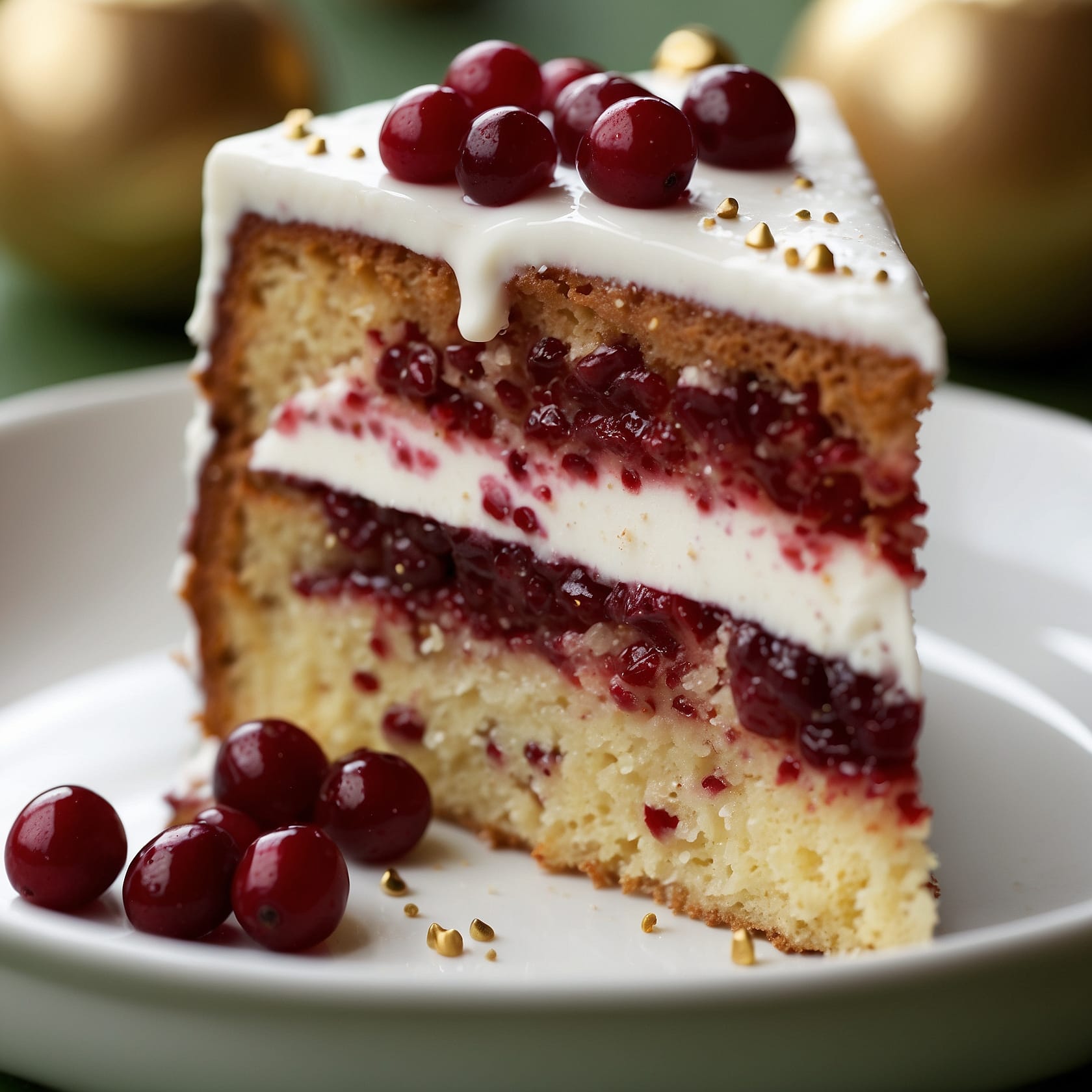 Desserts
 BREAKFAST
For more amazing recipes, be sure to check out our other sections to explore a variety of ideas that will enrich your cooking experience. Each section offers its own unique flavors to ensure a delightful culinary journey:
Easy and Quick Recipes: A collection of dishes that guarantee delicious meals with minimal effort and time.
Healthy Recipes: Discover healthy and delicious options that fit your lifestyle.
Desserts: A diverse selection of sweets that will add a special touch of sweetness to your table.
Lunch Recipes: Tasty lunch ideas that you can easily prepare to delight your family.
Dinner Recipes: Delicious and easy-to-make recipes that will make your dinner a memorable occasion.
Frequently Asked Questions
Q: Can I make Fresh Fruit Sponge Cake ahead of time for a party?
A: Absolutely! This is one of the beauties of this easy homemade recipe. You can bake the sponge layers up to two days ahead and store them covered at room temperature, or freeze them for up to three months. If you’re planning to add cream or fresh fruit toppings, assemble the cake no more than 4-6 hours before serving to maintain optimal texture. The unfrosted Fresh Fruit Sponge Cake actually improves slightly after a day, as the flavors meld and the texture settles into perfect tenderness.
Q: Why did my Fresh Fruit Sponge Cake turn out dense instead of light and fluffy?
A: Dense texture usually results from overmixing after adding the flour, which develops gluten and deflates the air bubbles created by the beaten eggs. Remember to fold ingredients together gently using a cutting and folding motion rather than stirring. Other common causes include underbeaten egg whites (they should hold firm peaks), using cold eggs (always use room temperature eggs), or opening the oven door too early during baking, which can cause the cake to collapse.
Q: What’s the best way to prevent fruits from sinking to the bottom of my cake?
A: The key is preparation and technique. Pat all fruits completely dry with paper towels, then toss them lightly in a tablespoon of flour before folding them into the batter. This coating helps the fruits grip the batter and stay suspended during baking. Also, cut fruits into appropriate sizes – berries can stay whole, but larger fruits should be sliced into pieces no bigger than your thumbnail. If using very juicy fruits, you might need to add an extra tablespoon of flour to the batter for better support.
Q: Can I substitute different types of flour in this Fresh Fruit Sponge Cake recipe?
A: Yes, with some adjustments. For gluten-free baking, use a high-quality gluten-free flour blend that contains xanthan gum, substituting cup-for-cup. The texture will be slightly different but still delicious. Almond flour creates a denser, more moist cake with lovely nutty flavors that pair beautifully with berries, though you may need to reduce the amount slightly. Self-raising flour can work, but reduce or eliminate any additional leavening agents. Cake flour will create an even more tender crumb, while bread flour will make the cake slightly chewier.
Q: How do I know when my Fresh Fruit Sponge Cake is perfectly baked?
A: Look for multiple indicators: the cake should be golden brown on top, spring back lightly when gently touched in the center, and just barely start to pull away from the sides of the tin. The cake should sound slightly hollow when gently tapped. A toothpick inserted in the center should come out with just a few moist crumbs – completely clean can indicate overbaking. Most importantly, trust your nose – a perfectly baked Fresh Fruit Sponge Cake will fill your kitchen with an irresistible sweet, fruity aroma that tells you it’s ready to emerge from the oven.
Conclusion
There’s something deeply satisfying about creating a beautiful Fresh Fruit Sponge Cake from scratch – watching simple ingredients transform into something magical, filling your home with incredible aromas, and seeing the joy on people’s faces when you present your homemade masterpiece. This isn’t just another dessert recipe; it’s a gateway to countless memories, celebrations, and moments of pure culinary joy.
Whether you’re a complete beginner or an experienced baker, this Fresh Fruit Sponge Cake recipe offers the perfect balance of simplicity and sophistication. The techniques you’ll master while making this family favorite recipe will serve you well in countless other baking adventures, while the immediate rewards – that first bite of cloud-like sponge bursting with fresh fruit flavors – provide instant gratification that makes all the careful folding and gentle handling worthwhile.
I encourage you to make this recipe your own. Experiment with seasonal fruits, try different presentation styles, and don’t be afraid to make mistakes along the way. Some of my best baking discoveries have come from happy accidents and creative substitutions. Most importantly, share your Fresh Fruit Sponge Cake with others – food has this incredible power to bring people together, create connections, and turn ordinary moments into cherished memories.
So tie on that apron, gather your ingredients, and embark on this delightful baking journey. I’d love to hear about your experiences, see photos of your creations, and learn about any creative variations you discover. Happy baking, and may your Fresh Fruit Sponge Cake bring as much joy to your kitchen as it has to mine over all these wonderful years!